

Guard Your Heart Scripture: What Proverbs 4:23 Says About Offense
Curated insights from The Unoffendable Heart by Mike Signorelli
Proverbs 4:23 says, “Guard your heart, for everything you do flows from it” (NIV). To guard your heart, as this verse instructs, is to watch over it so that life keeps flowing from it. It is not a call to build walls that keep people out. Many people take this Bible verse as permission to pull back from the people who hurt them. Mike Signorelli knows that move well. In The Unoffendable Heart, he admits his own guarded heart had gradually become a fortified one. He shows how offense blocks the flow of life from your heart and how Jesus clears the blockage.
What Does Proverbs 4:23 Mean?
Proverbs 4:23 pictures the heart as a wellspring, the source everything else in your life flows from. The English Standard Version reads, “Keep your heart with all vigilance, for from it flow the springs of life” (Proverbs 4:23). The New International Version puts it more directly: “Guard your heart, for everything you do flows from it.”
Signorelli zeroes in on one word: flow. “Life flows from the heart,” he writes. “It doesn’t trickle; it flows.” So guarding your heart means keeping that spring clear. Usually, what clogs it is something small. Jesus said plainly, “Offenses will certainly come” (Luke 17:1 CSB). People are going to let us down. Signorelli is more interested in what those letdowns do once they get inside us.
Guarding Your Heart Is Not the Same as Walling It Off
Signorelli used to treat “guard your heart” as permission to keep people at arm’s length. “For a long time, I quoted Proverbs 4:23 as my excuse for retreat,” he writes. He told himself he was being wise. Over time, guarding his heart morphed into fortifying it.
Eventually he saw what the verse actually says: “The verse doesn’t say to build walls around your heart; it says to watch over it. To guard means to stay attentive, to remain open, to keep it soft before God.” Looking back, he saw what he’d really been doing: “I wasn’t guarding my heart for Him. I was guarding it from people.”
Here’s why that matters: offense loves to pose as protection. Signorelli describes the rush of anger that tells us it will keep us from being hurt again, and he calls it a lie: “That fire doesn’t protect. It consumes. It doesn’t guard your heart. It burns it.”
How Offense Clogs the Heart
Signorelli builds his teaching on offense around the physical heart. He tells the story of a 44-year-old associate pastor who looked healthy from the outside, still preaching and caring for his congregation and his four children, until tests showed his arteries were ninety percent blocked. His doctors scheduled open-heart surgery that same day. Nobody had seen it coming, and that’s Signorelli’s point: “The heart doesn’t have to stop beating to be failing. It just needs to be blocked.”
The inner life works the same way. We can keep working, parenting, and serving while offense narrows the flow. Signorelli names four symptoms that are easier to spot than most of us realize: life works the same way. We can keep working, parenting, and serving while offense quietly narrows the flow. Signorelli names four symptoms that are easier to spot than most of us admit:
1. A heaviness around certain people, as if they drain you
2. Replaying arguments in your mind, even after the other person has forgotten them
3. Bristling quickly at the slightest criticism
4. An inner voice that insists “it’s not fair” long after the moment has passed
“These aren’t just quirks,” he writes. “They are signs of a blocked heart.”
The Four Chambers of the Spiritual Heart
The central framework of The Unoffendable Heart grows out of that same picture. Just as the physical heart has four chambers, Signorelli writes, our spiritual lives have four chambers that must stay clear for love, joy, and peace to flow. As he puts it, “The four chambers of the spiritual heart are expectations, justice, confidence, and memory.” It’s a word picture, of course, but a useful one. It gives you a way to pinpoint exactly where offense has lodged.
1. Expectations
If offense has a favorite hiding place, it’s here. We expect a spouse to notice our effort, a boss to acknowledge our hours, a friend to check in when life is heavy. When they don’t, the disappointments pile up into a hidden ledger, and for some people they harden into a silent demand: You owe me.
2. Justice
This is the part of the heart that cries, “That’s not fair!” When it clogs, the desire for fairness turns into a desire for payback, and retaliation feeds a cycle that never satisfies. Signorelli points to Romans 12:19, where God tells His people never to avenge themselves because vengeance belongs to Him.
Beloved, never avenge yourselves, but leave it to the wrath of God, for it is written, “Vengeance is mine, I will repay, says the Lord” (ESV).
3. Confidence
Here offense feels personal. A single critique can echo into identity until it no longer says They don’t like what I did but They don’t like who I am. Signorelli connects this chamber to Proverbs 29:25: “The fear of man lays a snare” (ESV).
4. Memory
Memory is a gift, designed so we can remember God’s faithfulness. But when offense settles here, Signorelli writes, memories “stop teaching and start tormenting,” and an old wound can bleed as if it just happened. When even one chamber clogs, the whole heart suffers.
How Jesus Kept an Unoffendable Heart
If anyone had grounds to be offended, it was Jesus. He was betrayed by friends, slandered by enemies, and mocked by crowds, yet on the cross He prayed, “Father, forgive them, for they know not what they do” (Luke 23:34 ESV). That does not mean He felt no pain or ignored injustice. He felt pain deeply and confronted injustice head-on. What He did not do was let offense spread. Each chamber of His heart stayed clear:
| Chamber | When it clogs, it sounds like | How Jesus kept it clear |
| Expectations | “You owe me.” | His expectations were set on the Father, not on people. |
| Justice | “That’s not fair!” | His justice was entrusted to God, not driven by revenge. |
| Confidence | “They don’t like who I am.” | His confidence rested in being the beloved Son, not in public approval. |
| Memory | An old wound replaying as if it just happened | His memory was filled with the Father’s voice, not His enemies’ accusations. |
Jesus’s example shows us that being unoffendable has nothing to do with going numb. “An unoffendable heart doesn’t mean you stop caring,” Signorelli writes. “It means you care in the right way.” And the same Christ now lives in those who follow Him. As Signorelli puts it, “The work of becoming unoffendable isn’t about straining harder; it’s about letting His life flow through yours.”
Where Healing Begins
Of course, spotting a blockage doesn’t clear it. In The Unoffendable Heart, Signorelli walks readers through a healing process in which Jesus, the Great Physician, opens the places most painful to look at. Along the way he offers what he calls a “fire drill for the soul,” so that when the next spark of offense lands, you already know what to do.
Frequently Asked Questions
What does it mean to guard your heart?
Guarding your heart means watching over it so that life keeps flowing from it, as Proverbs 4:23 describes. Mike Signorelli explains that the verse calls believers to stay attentive and keep their hearts soft before God rather than build walls around them.
Does guarding your heart mean shutting people out?
No, guarding your heart is different from shutting people out. Signorelli writes that he once used Proverbs 4:23 as an excuse for retreat, until he realized he was guarding his heart from people instead of for God.
What does the Bible say about being offended?
The Bible teaches that offense will come to everyone; Jesus said, “Offenses will certainly come” (Luke 17:1 CSB). Signorelli argues that the real question is what those offenses do inside us, and Scripture warns against answering them with revenge (Romans 12:19 ESV).
How do I stop being offended so easily?
Start by finding where offense has lodged: your expectations, your sense of justice, your confidence, or your memory. Then, as Signorelli puts it, stop straining harder and let Christ’s life flow through yours.
Further Reading
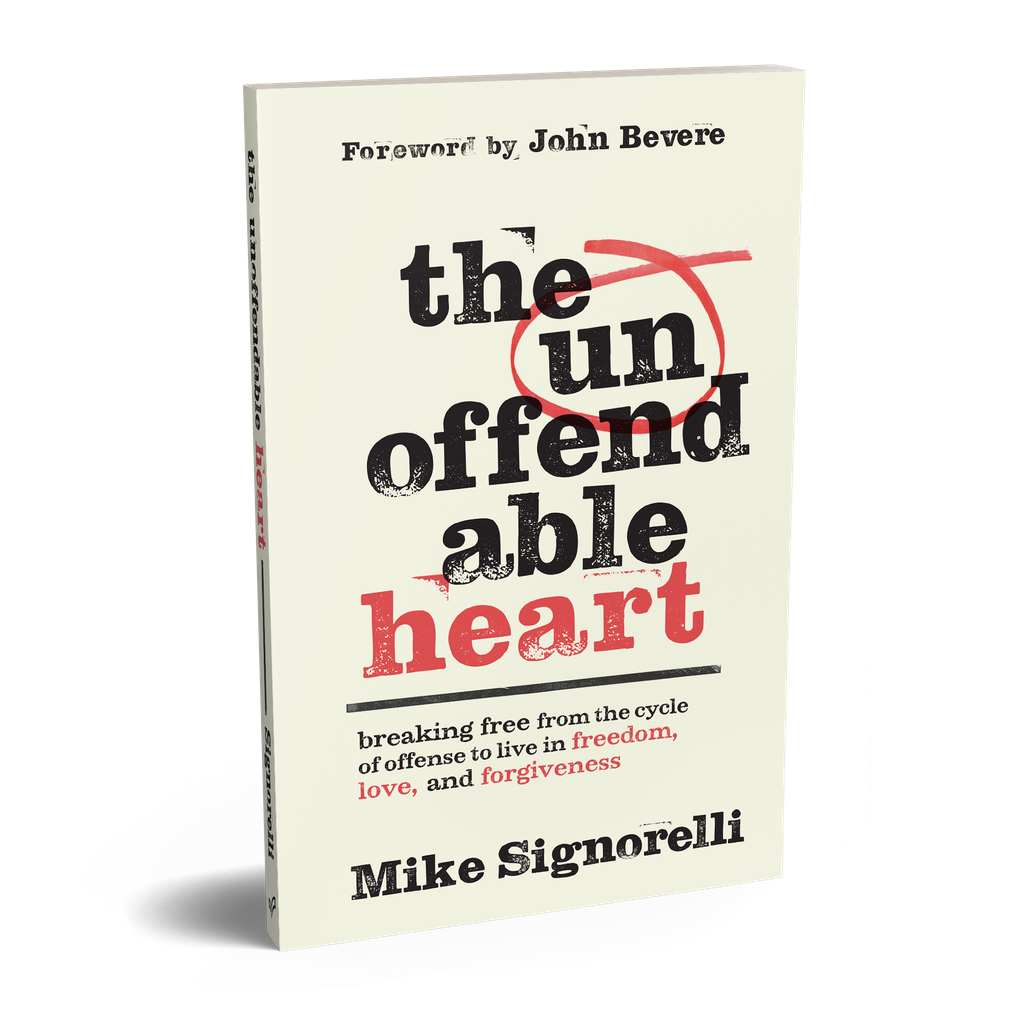
Mike Signorelli is the pastor and founder of V1 Church. In The Unoffendable Heart: Breaking Free from the Cycle of Offense to Live in Freedom, Love, and Forgiveness (Chosen Books, 2026), he takes readers chamber by chamber through the four places offense lodges (expectations, justice, confidence, and memory) and the healing Jesus brings to each. It is written for anyone tired of carrying old hurts into new relationships.
This article was drafted with an AI research tool and reviewed and verified against the source manuscript by Joyce Perez, Marketing Manager.


